JI-Logo-Half-SizeJI-Logo-Half-SizeJI-Logo-Half-SizeJI-Logo-Half-Size
  • Counterstrain
    • What is Counterstrain
    • Media Resources
  • Courses
    • Curricula
    • Course Schedule
  • Patients
  • Current Students
    • Student Portal Login
    • Learning Center Login
  • New Students
✕

Learning Counterstrain as a Beginner

January 9, 2026
Categories
  • Counterstrain in Practice
Tags

Counterstrain in Practice · Volume 1

Though every Counterstrain journey begins a little differently, there’s often a shared moment early on when something clicks. For many clinicians learning Counterstrain, that moment comes when a technique feels unexpectedly precise, a patient responds faster than expected, or the work begins to change how they think about treatment.

For the first edition of Counterstrain in Practice, we caught up with three Counterstrainers to reflect on what it was like to begin incorporating this work after their first course, and what surprised them most along the way.

Quick Wins and Early Challenges

Amy Stewart began using Counterstrain in 2014 while working as a home health therapist. Her early application of the technique was practical and immediate—especially with post-operative patients.

“I quickly noticed patients were recovering faster,” she said. “Swelling, pain, and range of motion improved in a much shorter period of time.”

As her confidence grew, so did the scope of her application. Counterstrain became part of nearly every treatment plan, addressing everything from chronic pain and weakness to gait difficulties. Her work was so successful, in fact, that Amy now runs her own practice in San Diego, CA.
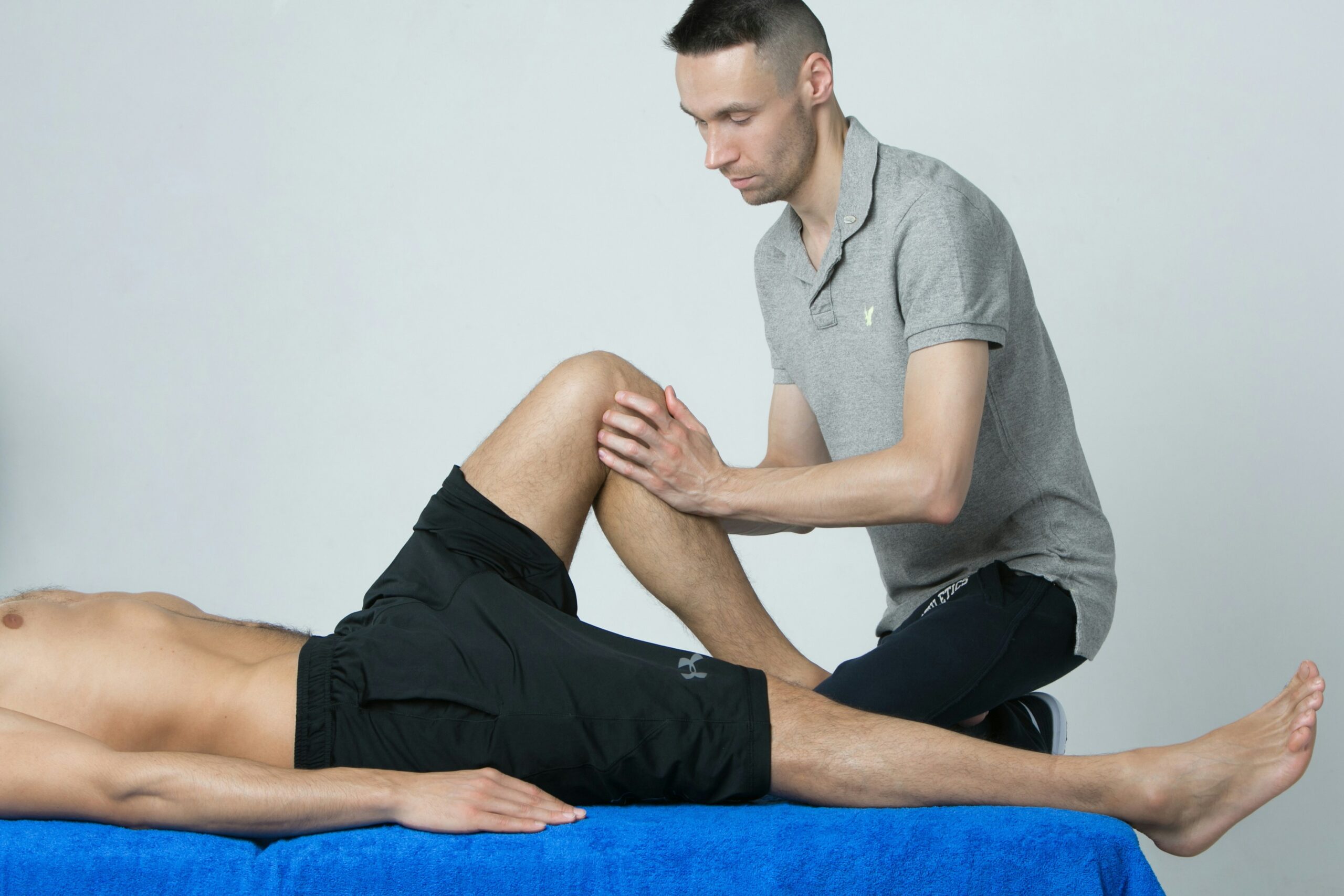
Photo by yury kirillov on Unsplash

Still, the early learning curve isn’t always easy. Dr. David Harvitz, owner of Renew Integrative Physical Therapy in Pensacola, FL, spoke candidly about his struggles.

“Incorporating Fascial Counterstrain in my practice after my first class was actually very difficult!” he said. “I had to go through sort of a midlife crisis, taking what I thought I knew and changing everything to an indirect, inflammatory-based model. This was very different from the direct mechanical model. I really struggled realizing that what I thought I knew was wrong.”

Seeing What’s Possible

Like David, many Counterstrainers begin their journey not by transforming their practice overnight, but by getting a glimpse into the future of manual therapy.

Dr. Holly Christy, founder of Element 7 Wellness in Poulsbo, WA, took her first Counterstrain course in 2010, at a time when the curriculum looked very different than it does today.

“There was only one Fascial Counterstrain course—a combined lymphatic and visceral course,” she shared. “Even then, I recognized how innovative and unprecedented this work was. I wanted to be part of it from the start.”

What stood out wasn’t just the technique itself, but its specificity.

“There is no physical medicine modality more powerful,” Holly said. “Fascial Counterstrain allows us to be incredibly targeted in our approach—like invisible surgery.”

More than a decade later, that sense of curiosity hasn’t faded. With 25 years in practice, Holly still encounters cases that challenge her. Using FCS to solve the puzzle is what keeps things interesting to her.

“I collaborate with my patients and involve them in their care,” she explained. “The ones who come prepared and have buy-in are the ones who do the best and recover the fastest.”

Is the Juice Worth the Squeeze?

Despite their early challenges, David and Amy agree: Counterstrain pays off in dividends.

“Mastering Counterstrain is complex,” she said. “But that challenge is also what sets us apart as clinicians. The effort is worth it because the improvements we help our patients achieve are truly life-changing.”

David added that although he was a very good manual therapist before Counterstrain, patients were wowed as they experienced faster and more complete results.

“The results just speak for themselves,” he said. “As I used Counterstrain, it was just more effective than what I was doing prior.”

Amy’s advice to those new to learning Counterstrain?

“Don’t give up. Success takes time—but it’s deeply rewarding.”


Counterstrain in Practice is a monthly series exploring real-world experiences across the Counterstrain learning journey.

For additional perspective on progressing beyond the introductory Foundations course, explore our YouTube discussion on why the lymphatic and venous systems play a critical role in learning and mastering Counterstrain.

Share
5

Comments are closed.

About

  • The Jones Institute
  • Counterstrain
  • Case Studies
  • Instructors
  • Blog

Courses

  • 2026 Schedule
  • Course Descriptions

Help

  • Search for Practitioner
  • FAQ
  • Contact Us
© The Jones Institute All Rights Reserved

      Shannon Arndt, MSPT, JSCC, is a distinguished physical therapist and owner of Soundview Center for Well-being, Lone Lake Physical Therapy, and Sage Counterstrain. She holds an MSPT from the University of Rhode Island, where she graduated at the top of her class, and is a Board Certified Specialist in Strain and Counterstrain. Shannon’s expertise extends to her work with The Bridge Back Project, where she uses counterstrain techniques to support veterans and first responders in their recovery from PTSD. Passionate about patient education, she thrives on uncovering the complex interconnections of physical impairments and empowering individuals to manage their health autonomously.

      Dr. Kim Braun, PT, DPT, brings over 30 years of experience to her practice as a doctor of physical therapy, with a focus on comprehensive pain and dysfunction treatment. She earned her initial PT degree from the University of Iowa and later completed her Doctor of Physical Therapy at St. Scholastica College. Passionate about infant care, Dr. Braun specializes in treating and preventing torticollis and plagiocephaly. Her dedication to patient-centered care is rooted in integrity, efficacy, compassion, and advocacy, utilizing a holistic approach for rehabilitation, prevention, and wellness. Dr. Braun has pursued extensive post-graduate study in the Fascial Counterstrain technique through the Jones Institute and with Brian Tuckey, PT, OCS, JSCCI, and is excited to leverage Counterstrain when other interventions have proven insufficient.

      Michael Wangsness, PT, DPT, ATC, CSC I, holds a Bachelor of Science in Athletic Training from Nova Southeastern University (2007) and earned his Doctorate in Physical Therapy from the University of Minnesota (2010). He began incorporating Fascial Counterstrain (FCS) into his practice in 2011 and has advanced to teaching roles, serving as a Teaching Assistant since 2016 and a Lab Instructor since 2020. In 2022, Michael was among the first to receive his CSC I certification. Passionate about FCS, he has been privileged to train extensively under Brian Tuckey. Michael currently practices at an outpatient clinic for M Health Fairview in Woodbury, MN. Outside of work, he enjoys golfing, coaching hockey, and spending time with his wife, Heather, and their three children: Olivia, Gavin, and Amelia.

      Greg Zadow has been a self-employed physical therapist since 1998. He earned a Bachelor of Applied Science in physiotherapy from the University of South Australia and Doctor of Physical Therapy from the Rocky Mountain University of Health Professionals. Greg is the owner and clinic director of Green Ridge Physical Therapy and Wellness, his Oregon-based private practice. In 2011, he became certified in the Strain Counterstrain (SCS) technique and continued on to complete a mastery program with Counterstrain Academy and become a Jones Strain Counterstrain Certified Instructor (JSCCI) of Fascial Counterstrain (FCS). Greg has been using Counterstrain ever since his first introduction to the technique in 1991 and now holds over 20 years of continuing education experience in the field of manual therapy.

      Kyle graduated from San Diego State University in 2010 with a bachelor’s degree in kinesiology and earned a Doctor of Physical Therapy from the University of Miami in 2014.​ Kyle immediately started his private practice and became certified with The Jones Institute after witnessing the powerful effects of Counterstrain on his patients. Kyle currently lends his expertise to the Doctor of Physical Therapy programs at both San Diego State University and the University of Miami. Since joining The Jones Institute as a lab instructor in 2015, Kyle has taken on additional roles in managing the company’s domestic headquarters, developing the curriculum for a new anatomy program, and teaching Anatomy Dissection as the lead instructor.

      Eryn Milian earned a Bachelor of Science in chemistry and environmental science from William Smith College along with a Doctor of Physical Therapy and PhD from the University of Miami. Her doctoral work focused on anatomical sciences and measurable outcomes which inform her current clinical expertise in orthopedics and sport physical therapy. Since joining the University of Miami’s faculty in 2013, Eryn has expanded her role as assistant professor to become a course master for neuroanatomy and instructor for both pelvic anatomy and the university’s orthopedic, sport, and neuroscience residency programs. Her research interests lie primarily in knee injuries and the development of reliable and valid measures of assessing ACL risk in adolescent athletes via musculoskeletal ultrasound.

      Tim Hodges has worked in the field of physical rehabilitation since 1996. Since joining The Jones Institute in 2004, he’s assisted Brian Tuckey, PT, OCS, JSCCI, in the development of several Fascial Counterstrain techniques and taught numerous Fascial Counterstrain courses as a certified instructor. Tim continues to apply his knowledge and expertise through Counterstrain Academy—a mastery program designed for licensed Counterstrainers throughout the country. In addition to developing the program’s curriculum and overseeing its mentorships, Tim is currently practicing at Counterstrain Portland, his Oregon-based private practice.

      Larry Ham graduated from the University of Southern California in 1978 with a Master of Science in physical therapy. He took his first Counterstrain course in 1986 after Lawrence Jones, D.O., treated him and successfully eliminated all back and sciatica pain. He’s now certified to teach Strain and Fascial Counterstrain courses for the spine and extremities and the viscera, respectively. In addition to teaching Counterstrain in the U.S. and Australia, Larry has served on the sidelines of over one thousand sporting events as a Certified Athletic Trainer. Though nearing retirement, Larry still practices in Spokane, Washington, and enjoys spending his free time with his wife, sons, and grandchildren. You can catch him scuba diving with sharks, remodeling his home, or hydrofoiling on the lake.

      Robert Dowd holds a Bachelor of Science in medicine with a certificate in physical therapy, Master of Healthcare Administration, and Doctor of Physical Therapy. Robert is now a Jones Strain Counterstrain Certified Instructor (JSCCI) who’s dedicated to presenting Counterstrain the way Lawrence Jones, D.O., advised his students to do at his final course offering. Robert applies the philosophy of Counterstrain to all clinical settings from the outpatient orthopedic clinic, acute care hospital, and ICU to the nursing home and hospice industry. When he’s not practicing in the Black Hills of South Dakota, Robert can be found writing, fishing, hunting, or riding his motorcycle.

      Holly Christy earned a Bachelor of Science from the University of Washington, Master of Acupuncture from Northwest Institute of Acupuncture and Oriental Medicine, and Doctor of Naturopathic Medicine from Bastyr University where she currently teaches as an adjunct clinical faculty member. Holly started her practice in 2000 and became a lead instructor for Counterstrain Academy in 2014 after a mastery-level internship with Tim Hodges, LMT, JSCCI. In 2019, she became a Jones Strain Counterstrain Certified Instructor (JSCCI) of Fascial Counterstrain (FCS) for the nervous system. Though Counterstrain is her primary modality, Holly also offers primary care, acupuncture, prolotherapy, custom orthotics, and intravenous nutrient therapy.

      Brian Tuckey, a magna cum laude graduate of the University of Maryland School of Physical Therapy, became board certified in orthopedics in 1995. Under the tutelage of Lawrence Jones, D.O., Brian became one of only four physical therapists in the world to be certified in the Strain Counterstrain (SCS) technique. He was also the first practitioner to recognize Counterstrain’s impact on the fascial system which led to his development of Fascial Counterstrain (FCS) with over 800 anatomically-specific techniques in addition to the FCS Cranial Scan—a proprietary assessment that identifies dysfunction in all systems and regions of the body. When he’s not teaching, Brian is treating complex patients at Tuckey and Associates Physical Therapy in Frederick, Maryland.

      Randall Kusunose founded The Jones Institute in 1988 with Lawrence Jones, D.O., the original developer of Counterstrain. He was the first therapist to be board certified in orthopedics by the American Board of Physical Therapy Specialties in California. Randall has trained all Jones Strain Counterstrain Certified Instructors (JSCCI) in the U.S., France, Italy, and Australia, and developed over 60 Jones Strain Counterstrain techniques along with the Facilitated Counterstrain curriculum. When he’s not practicing, you can find Randall skiing, scuba diving, and relaxing on the sand in the beautiful beach town of Encinitas, California.