JI-Logo-Half-SizeJI-Logo-Half-SizeJI-Logo-Half-SizeJI-Logo-Half-Size
  • Counterstrain
    • What is Counterstrain
    • Media Resources
  • Courses
    • Curricula
    • Course Schedule
  • Patients
  • Current Students
    • Student Portal Login
    • Learning Center Login
  • New Students
✕

Learning to Trust the FCS Cranial Scan

May 28, 2026
Categories
  • Advice
  • Counterstrain in Practice
Tags
  • FCS Cranial Scan
  • learning Counterstrain
  • success stories

Counterstrain in Practice · Issue #5

For many practitioners, the FCS cranial scan is one of the most challenging skills to develop. It’s also one of the most important.

The cranial scan is a diagnostic tool used to identify patterns of dysfunction and guide treatment decisions within the Fascial Counterstrain model. Like the techniques themselves, scanning requires practitioners to have a firm grasp on anatomy and develop precise palpation skills.
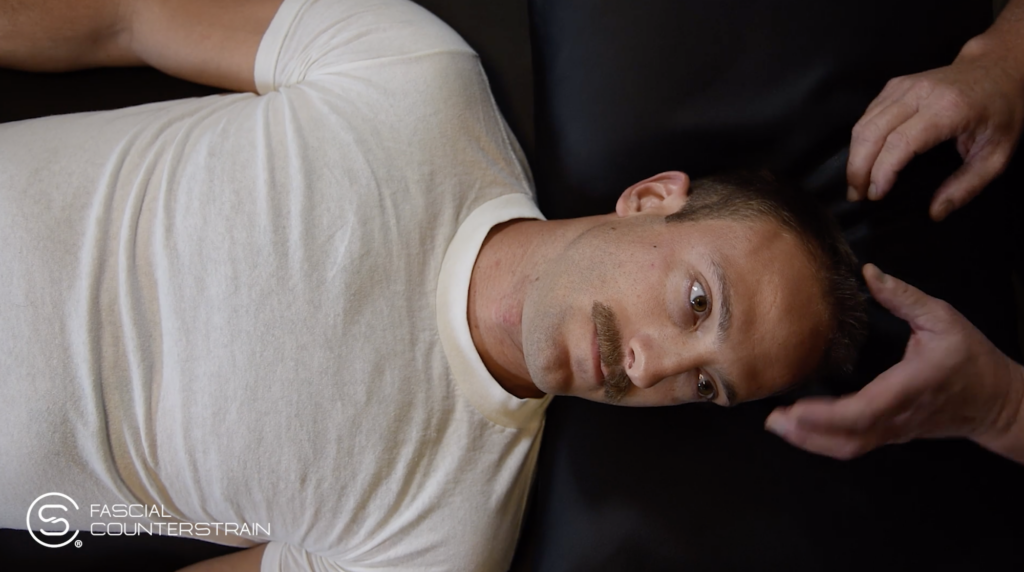
We caught up with FCS-developer, Brian Tuckey, to get his take on learning the scan, overcoming obstacles, and bringing it into practice.

Why the FCS Cranial Scan Takes Time to Master

One of the biggest challenges is not just the technical skill itself, but that practitioners often expect mastery too early.

“Some students expect to become proficient in FCS immediately after completing Foundations which is unrealistic and often leads to frustration,” Brian explained. “Mastery requires proper technique, consistent practice, and perseverance.”

And while this may feel discouraging at first, it’s a sentiment that resonates deeply with high-level Counterstrainers.

Mark Vennerholm, a teaching assistant for The Jones Institute, described his early coursework as “drinking from a fire hose.” It wasn’t until several courses into the curriculum that things started to connect clinically. Instead of trying to absorb every new technique, he shifted his focus toward diagnostics—particularly the cranial scan and tender point matching.

“Once I really focused on the skill of finding positive scans in class,” he shared, “adding new techniques didn’t seem like such a daunting task.”

The FCS Cranial Scan as a Diagnostic Framework

For most practitioners, the learning curve is even steeper because while some modalities utilize a variation of cranial therapy, the FCS cranial scan represents an entirely new diagnostic framework.

Mary Beth Johnson, a clinician certified in both traditional Strain Counterstrain and Fascial Counterstrain, admitted she initially resisted the scan altogether.

“Learning the cranial scan was incredibly difficult for me. I fought it right and left,” she said. “But I forced myself to scan every patient I worked with even if I didn’t follow it up with a Counterstrain treatment. I also practiced the scans on my own head in order to solidify the anatomy. I did this every night before I fell asleep.”

Over time, this repetition helped Mary Beth understand the difference between normal tissue presentation and dysfunction. “Now here I am five years later and I use it with every patient I see.”

Progress not perfection

That progression is exactly what Brian hopes students understand.

His advice for gaining proficiency? “Carefully study and review cranial bone anatomy, and practice the key C-scan principles taught in F1 including location, depth, speed, and direction. Hands-on experience with real cases is also critical; this may mean treating patients after hours or practicing with friends and family. You can confirm that you’re scanning correctly when the tender points you identify match the scan findings and connect via inhibitory testing.”

Brian also discourages students from measuring their progress against certain cases too early in the process.

“It’s common to struggle with patients who exhibit central sensitization, where everything feels restricted and tender points seem to recur or don’t fully release,” he said. “These cases require advanced diagnostics and skills, so avoid judging your progress based on your most complex and dysfunctional patients. Instead, refer them to more experienced practitioners once you plateau and continue building your proficiency with less complex cases.”

No matter where clinicians are in the curriculum, the advice from experienced practitioners is remarkably consistent: keep scanning. Practice on classmates and family members. Recheck landmarks. Ask instructors for feedback. Use the manuals. Stay patient with the process.

It usually takes three to four courses for the FCS cranial scan to click. Students can trust that when it does, the entire Fascial Counterstrain model will suddenly feel expansive and far more accessible.


Counterstrain in Practice is a monthly series exploring real-world experiences across the Counterstrain learning journey.

Share
3

2 Comments

  1. CHristie Hanchey says:
    May 30, 2026 at 1:15 am

    I have hEDS. This modality has helped to give me my life back. I want to learn this but am not a PT. Is there a way to learn more to help in between visits?

    Reply
    • admin says:
      June 1, 2026 at 10:36 pm

      Hi, Christie! We’re so happy Counterstrain helped you get your life back. Many of our students started as patients who decided to pursue a career in Counterstrain. If you’re interested, traditional Strain Counterstrain (SCS) would be your best starting point. You can learn more about the online course here: https://bit.ly/scs-complete-body-online.

      Reply

Leave a Reply Cancel reply

Your email address will not be published. Required fields are marked *

About

  • The Jones Institute
  • Counterstrain
  • Case Studies
  • Instructors
  • Blog

Courses

  • 2026 Schedule
  • Course Descriptions

Help

  • Search for Practitioner
  • FAQ
  • Contact Us
© The Jones Institute All Rights Reserved

      Shannon Arndt, MSPT, JSCC, is a distinguished physical therapist and owner of Soundview Center for Well-being, Lone Lake Physical Therapy, and Sage Counterstrain. She holds an MSPT from the University of Rhode Island, where she graduated at the top of her class, and is a Board Certified Specialist in Strain and Counterstrain. Shannon’s expertise extends to her work with The Bridge Back Project, where she uses counterstrain techniques to support veterans and first responders in their recovery from PTSD. Passionate about patient education, she thrives on uncovering the complex interconnections of physical impairments and empowering individuals to manage their health autonomously.

      Dr. Kim Braun, PT, DPT, brings over 30 years of experience to her practice as a doctor of physical therapy, with a focus on comprehensive pain and dysfunction treatment. She earned her initial PT degree from the University of Iowa and later completed her Doctor of Physical Therapy at St. Scholastica College. Passionate about infant care, Dr. Braun specializes in treating and preventing torticollis and plagiocephaly. Her dedication to patient-centered care is rooted in integrity, efficacy, compassion, and advocacy, utilizing a holistic approach for rehabilitation, prevention, and wellness. Dr. Braun has pursued extensive post-graduate study in the Fascial Counterstrain technique through the Jones Institute and with Brian Tuckey, PT, OCS, JSCCI, and is excited to leverage Counterstrain when other interventions have proven insufficient.

      Michael Wangsness, PT, DPT, ATC, CSC I, holds a Bachelor of Science in Athletic Training from Nova Southeastern University (2007) and earned his Doctorate in Physical Therapy from the University of Minnesota (2010). He began incorporating Fascial Counterstrain (FCS) into his practice in 2011 and has advanced to teaching roles, serving as a Teaching Assistant since 2016 and a Lab Instructor since 2020. In 2022, Michael was among the first to receive his CSC I certification. Passionate about FCS, he has been privileged to train extensively under Brian Tuckey. Michael currently practices at an outpatient clinic for M Health Fairview in Woodbury, MN. Outside of work, he enjoys golfing, coaching hockey, and spending time with his wife, Heather, and their three children: Olivia, Gavin, and Amelia.

      Greg Zadow has been a self-employed physical therapist since 1998. He earned a Bachelor of Applied Science in physiotherapy from the University of South Australia and Doctor of Physical Therapy from the Rocky Mountain University of Health Professionals. Greg is the owner and clinic director of Green Ridge Physical Therapy and Wellness, his Oregon-based private practice. In 2011, he became certified in the Strain Counterstrain (SCS) technique and continued on to complete a mastery program with Counterstrain Academy and become a Jones Strain Counterstrain Certified Instructor (JSCCI) of Fascial Counterstrain (FCS). Greg has been using Counterstrain ever since his first introduction to the technique in 1991 and now holds over 20 years of continuing education experience in the field of manual therapy.

      Kyle graduated from San Diego State University in 2010 with a bachelor’s degree in kinesiology and earned a Doctor of Physical Therapy from the University of Miami in 2014.​ Kyle immediately started his private practice and became certified with The Jones Institute after witnessing the powerful effects of Counterstrain on his patients. Kyle currently lends his expertise to the Doctor of Physical Therapy programs at both San Diego State University and the University of Miami. Since joining The Jones Institute as a lab instructor in 2015, Kyle has taken on additional roles in managing the company’s domestic headquarters, developing the curriculum for a new anatomy program, and teaching Anatomy Dissection as the lead instructor.

      Eryn Milian earned a Bachelor of Science in chemistry and environmental science from William Smith College along with a Doctor of Physical Therapy and PhD from the University of Miami. Her doctoral work focused on anatomical sciences and measurable outcomes which inform her current clinical expertise in orthopedics and sport physical therapy. Since joining the University of Miami’s faculty in 2013, Eryn has expanded her role as assistant professor to become a course master for neuroanatomy and instructor for both pelvic anatomy and the university’s orthopedic, sport, and neuroscience residency programs. Her research interests lie primarily in knee injuries and the development of reliable and valid measures of assessing ACL risk in adolescent athletes via musculoskeletal ultrasound.

      Tim Hodges has worked in the field of physical rehabilitation since 1996. Since joining The Jones Institute in 2004, he’s assisted Brian Tuckey, PT, OCS, JSCCI, in the development of several Fascial Counterstrain techniques and taught numerous Fascial Counterstrain courses as a certified instructor. Tim continues to apply his knowledge and expertise through Counterstrain Academy—a mastery program designed for licensed Counterstrainers throughout the country. In addition to developing the program’s curriculum and overseeing its mentorships, Tim is currently practicing at Counterstrain Portland, his Oregon-based private practice.

      Larry Ham graduated from the University of Southern California in 1978 with a Master of Science in physical therapy. He took his first Counterstrain course in 1986 after Lawrence Jones, D.O., treated him and successfully eliminated all back and sciatica pain. He’s now certified to teach Strain and Fascial Counterstrain courses for the spine and extremities and the viscera, respectively. In addition to teaching Counterstrain in the U.S. and Australia, Larry has served on the sidelines of over one thousand sporting events as a Certified Athletic Trainer. Though nearing retirement, Larry still practices in Spokane, Washington, and enjoys spending his free time with his wife, sons, and grandchildren. You can catch him scuba diving with sharks, remodeling his home, or hydrofoiling on the lake.

      Robert Dowd holds a Bachelor of Science in medicine with a certificate in physical therapy, Master of Healthcare Administration, and Doctor of Physical Therapy. Robert is now a Jones Strain Counterstrain Certified Instructor (JSCCI) who’s dedicated to presenting Counterstrain the way Lawrence Jones, D.O., advised his students to do at his final course offering. Robert applies the philosophy of Counterstrain to all clinical settings from the outpatient orthopedic clinic, acute care hospital, and ICU to the nursing home and hospice industry. When he’s not practicing in the Black Hills of South Dakota, Robert can be found writing, fishing, hunting, or riding his motorcycle.

      Holly Christy earned a Bachelor of Science from the University of Washington, Master of Acupuncture from Northwest Institute of Acupuncture and Oriental Medicine, and Doctor of Naturopathic Medicine from Bastyr University where she currently teaches as an adjunct clinical faculty member. Holly started her practice in 2000 and became a lead instructor for Counterstrain Academy in 2014 after a mastery-level internship with Tim Hodges, LMT, JSCCI. In 2019, she became a Jones Strain Counterstrain Certified Instructor (JSCCI) of Fascial Counterstrain (FCS) for the nervous system. Though Counterstrain is her primary modality, Holly also offers primary care, acupuncture, prolotherapy, custom orthotics, and intravenous nutrient therapy.

      Brian Tuckey, a magna cum laude graduate of the University of Maryland School of Physical Therapy, became board certified in orthopedics in 1995. Under the tutelage of Lawrence Jones, D.O., Brian became one of only four physical therapists in the world to be certified in the Strain Counterstrain (SCS) technique. He was also the first practitioner to recognize Counterstrain’s impact on the fascial system which led to his development of Fascial Counterstrain (FCS) with over 800 anatomically-specific techniques in addition to the FCS Cranial Scan—a proprietary assessment that identifies dysfunction in all systems and regions of the body. When he’s not teaching, Brian is treating complex patients at Tuckey and Associates Physical Therapy in Frederick, Maryland.

      Randall Kusunose founded The Jones Institute in 1988 with Lawrence Jones, D.O., the original developer of Counterstrain. He was the first therapist to be board certified in orthopedics by the American Board of Physical Therapy Specialties in California. Randall has trained all Jones Strain Counterstrain Certified Instructors (JSCCI) in the U.S., France, Italy, and Australia, and developed over 60 Jones Strain Counterstrain techniques along with the Facilitated Counterstrain curriculum. When he’s not practicing, you can find Randall skiing, scuba diving, and relaxing on the sand in the beautiful beach town of Encinitas, California.